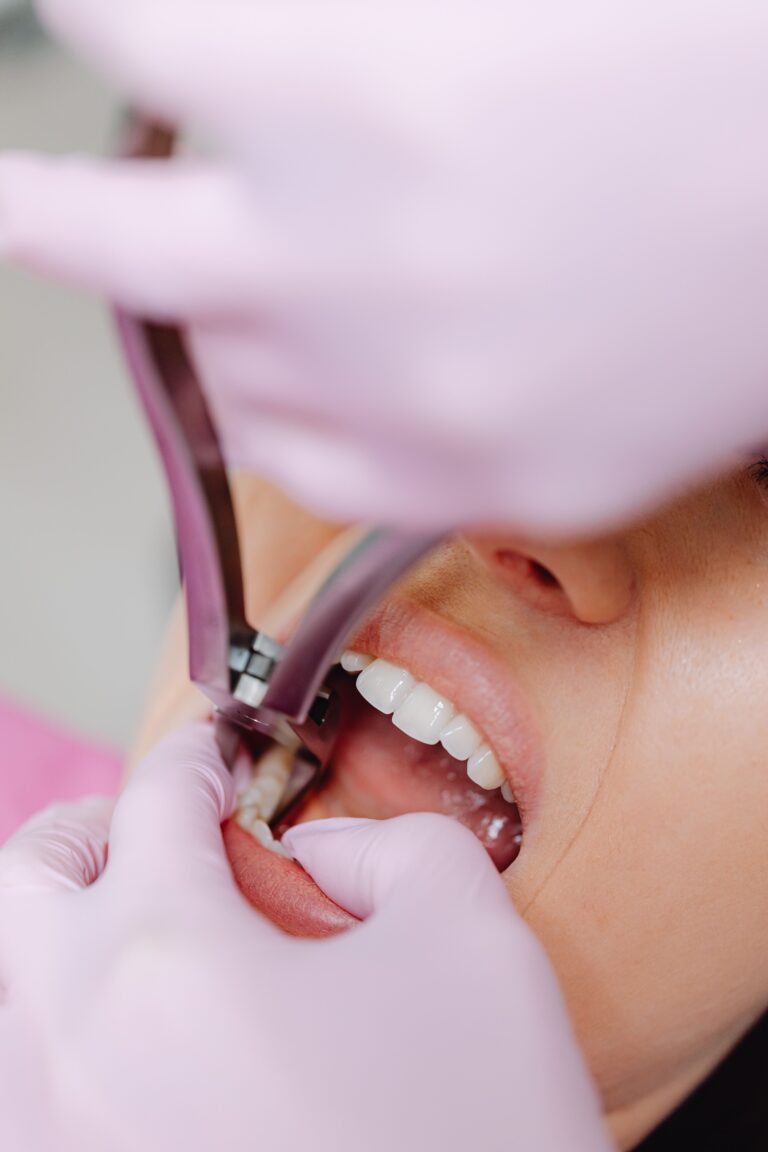
In 2024, a meta-analysis of 74 studies covering 172,239 people put the global proportion with a temporomandibular disorder (TMD) at 34% (Zieliński et al., Journal of Clinical Medicine, 2024). If a third of adults have it, why does it still feel so alarming when your jaw clicks or aches?
Because “TMJ” covers very different things, from a harmless pop to a jaw that locks shut. This guide separates them: what a TMJ disorder is, when clicking matters, whether your bite is to blame, which treatments have evidence behind them, and when to get checked. It’s written for adults, since Dr. Shreya doesn’t treat children.
Key Takeaways A 2024 meta-analysis of 74 studies found 34% of people worldwide have a TMJ disorder. The NHS says TMD usually gets better without treatment. A 2020 review of 48 trials found splint therapy helps, but with moderate to very low certainty. Locking, trouble eating or drinking, or vision changes need prompt medical attention.
What Is a TMJ Disorder, and How Common Is It?
“TMJ” is the jaw joint itself; a TMJ disorder, or TMD, is a group of problems affecting that joint and the chewing muscles around it. The 2024 meta-analysis found 34% worldwide, with the 18 to 60 age group most affected, and the female share larger than the male share on every continent (Zieliński et al., Journal of Clinical Medicine, 2024).
The NHS lists the typical symptoms as pain around the jaw, ear and temple, clicking, popping or grinding when you move your jaw, a headache around the temples, difficulty opening fully, and the jaw locking while open. Pain may be worse when chewing or when stressed, and it can disturb sleep (NHS, Temporomandibular disorder, last reviewed June 2023).
[CITATION CAPSULE] A 2024 meta-analysis of 74 studies and 172,239 people found that 34% of the world’s population has a temporomandibular disorder, with the 18 to 60 age group most exposed. Pooled prevalence was highest in South America (47%), followed by Asia (33%) and Europe (29%) (Zieliński et al., Journal of Clinical Medicine, 2024).
The review didn’t report a Middle East figure, so I can’t tell you how common it is in the UAE. What it does show is that jaw problems are common enough that having them doesn’t mean something is badly wrong.
Is Jaw Clicking a Problem?
Not on its own. The NHS says TMD “usually gets better without treatment,” and it frames the warning signs around what you can’t do rather than what you can hear. Seek prompt help if you can’t eat or drink, if your jaw locks or you can’t open your mouth, if you have frequent severe headaches or tenderness in the scalp or temples, or if you have vision problems (NHS, Temporomandibular disorder, last reviewed June 2023).
So a click or pop without pain is worth mentioning at your next check-up but isn’t urgent. Pain, locking, or a jaw that stops opening is different. The NHS page’s own review date (June 2026) has passed, so it’s worth checking the live page if you’re relying on it.
Does a Bad Bite Cause TMJ Pain?
Probably not, despite what many people have been told. A 2017 systematic review of 25 studies found a lack of clinically relevant association between TMD and dental occlusion. Of the almost forty bite features examined, only two were linked to TMD in most single-variable analyses, and the authors noted that even that link doesn’t prove cause: bite interferences might be a result of TMD rather than the reason for it. They encouraged clinicians to abandon the old gnathological paradigm (Manfredini et al., Journal of Oral Rehabilitation, 2017).
[UNIQUE INSIGHT] That has a practical consequence. If a dentist proposes grinding down your teeth, or rebuilding your bite with crowns or veneers, to cure jaw pain, the evidence base for that is weak. Ask what the aim is and what the alternative is. The NHS lists an uneven bite as one possible cause but also teeth grinding, wear and tear of the joint, a blow to the face, and stress.
Teeth grinding is the factor most people ask about, and it deserves its own page. Teeth Grinding and Dental Work: Crowns, Veneers, and Implants covers how grinding affects restorations and what night guards do.
What Helps? Self-Care Comes First
For most people, the first step is simple. The NHS suggests eating soft food, taking paracetamol or ibuprofen, and using an ice pack or heat pack wrapped in a tea towel. It also advises massaging the jaw muscles, trying to relax, and avoiding chewing gum, pen tops, yawning wide, nail biting and clenching your teeth together (NHS, Temporomandibular disorder, last reviewed June 2023).
Does physical therapy add anything? A 2016 review of 48 randomised trials found the overall evidence was low. Manual therapy, alone or with exercises at the jaw or neck, showed promising effects, but the trials had unclear or high risk of bias and no high-quality evidence existed, leaving great uncertainty about effectiveness (Armijo-Olivo et al., Physical Therapy, 2016). That isn’t the same as saying exercises don’t work. It means the research hasn’t been good enough to say.
Check any painkiller with your doctor or pharmacist if you have stomach, kidney or heart problems, or if you take other medication.
Do Splints and Night Guards Work?
They can help, but the certainty is low. A 2020 network meta-analysis of 48 randomised trials found significant pain reduction with several splint types compared with controls, though the quality of evidence ran from moderate to very low. The strongest results for combined treatment came from counselling plus a hard stabilisation splint (Al-Moraissi et al., International Journal of Oral and Maxillofacial Surgery, 2020).
The chart shows a ranking score, which tells you how a treatment placed against the others, not the share of patients who got better. Read it for the pattern: the highest-ranked treatment in joint-related TMD had very low-quality evidence behind it, while the hard stabilisation splint had moderate-quality evidence. The authors concluded that counselling plus a hard splint may produce the maximum improvement.
A well-fitted night guard isn’t harmless to ignore either. If you grind, it protects teeth and restorations, which is a separate benefit covered in the grinding guide linked above.
When Should You See a Dentist?
See a dentist when pain persists, affects eating or sleep, or the jaw catches or locks. The NHS page gives no time limit for how long to try self-care, so use judgement: if it hasn’t settled within a few weeks, get it checked, and sooner if symptoms are severe. If you can’t eat or drink, or the jaw won’t open, don’t wait.
A dentist can check your teeth for wear that suggests grinding, assess how far your mouth opens, feel the muscles and joint, and look for a dental cause of the pain, such as an infected tooth that mimics jaw pain. If the cause isn’t dental, they’ll refer you onwards. Dental pain that feels like jaw pain is covered in Toothache: Causes, Relief, and When It Becomes an Emergency.
Sofia Smile Clinic is open Saturday to Thursday, 11:00 to 20:00, and closed on Fridays. If the pain is sudden and severe, tell the front desk it’s an emergency, as same-day emergency care is handled.
Frequently Asked Questions
Is jaw clicking normal?
Often, yes. The NHS says TMD usually gets better without treatment, and its warning signs are inability to eat or drink, locking, difficulty opening, severe headaches, scalp or temple tenderness, and vision problems. A painless click is worth mentioning but isn’t an emergency.
Can stress cause TMJ pain?
It can contribute. The NHS lists stress among causes, along with teeth grinding, wear and tear of the joint, a blow to the jaw and an uneven bite. Pain may be worse when you’re stressed, and slow breathing and relaxing the jaw can help.
Will a night guard cure TMJ?
Not reliably. A 2020 review of 48 trials found splints reduced pain versus controls in several forms, but evidence quality ran from moderate to very low. Counselling plus a hard splint ranked best among combined options.
Does my bite cause my jaw pain?
Probably not. A 2017 review of 25 studies found no clinically relevant association between TMD and dental occlusion, and urged clinicians to abandon bite-adjustment thinking. Be cautious about treatment that reshapes teeth to cure jaw pain.
Should I avoid chewing gum with TMJ pain?
The NHS advises avoiding chewing gum, along with pen tops, wide yawning, nail biting and clenching. Eating soft food while it settles is also advised. If symptoms persist for weeks, get checked rather than waiting.
Conclusion
About a third of adults have some kind of jaw joint disorder, most cases settle with soft food, heat or ice, and relaxation, and the evidence for fancier treatments is weaker than their reputation suggests. The signs that shouldn’t wait are locking, an inability to eat or drink, and vision changes.
If your jaw pain has lasted more than a few weeks, or you want a second opinion on a proposed bite-changing treatment, you can book an assessment at Sofia Smile Clinic in Dubai Silicon Oasis. Bring a note of when it hurts, what you were doing, and any history of grinding.
Sources
- Zieliński G, Pająk-Zielińska B, Ginszt M, A Meta-Analysis of the Global Prevalence of Temporomandibular Disorders, Journal of Clinical Medicine 2024, retrieved 2026-11-16 (Tier 1, 74 studies, 172,239 subjects, abstract-level data)
- Al-Moraissi EA, Farea R, Qasem KA, Al-Wadeai MS, Al-Sabahi ME, Al-Iryani GM, Effectiveness of occlusal splint therapy in the management of temporomandibular disorders: network meta-analysis of randomized controlled trials, International Journal of Oral and Maxillofacial Surgery 2020, retrieved 2026-11-16 (Tier 1, 48 RCTs, abstract-level data)
- Armijo-Olivo S, Pitance L, Singh V, Neto F, Thie N, Michelotti A, Effectiveness of Manual Therapy and Therapeutic Exercise for Temporomandibular Disorders: Systematic Review and Meta-Analysis, Physical Therapy 2016, retrieved 2026-11-16 (Tier 1, 48 RCTs, abstract-level data)
- Manfredini D, Lombardo L, Siciliani G, Temporomandibular disorders and dental occlusion. A systematic review of association studies: end of an era?, Journal of Oral Rehabilitation 2017, retrieved 2026-11-16 (Tier 1, 25 papers, abstract-level data)
- NHS, Temporomandibular disorder, last reviewed 20 June 2023 (next review date 20 June 2026 has passed), retrieved 2026-11-16 (Tier 1, official UK health service)
- Sofia Smile Clinic opening hours and emergency handling are the clinic’s own statements (Tier 4)